
China and the United States started a fresh round of talks on Wednesday in Washington amid upbeat hopes of finalising a comprehensive agreement to end their protracted trade war.
Chinese Vice-Premier Liu He was greeted by US Trade Representative Robert Lighthizer outside the USTR office on Wednesday morning, shaking hands. In a rare display of enthusiasm, Liu waved to the reporters before entering the USTR office.
Larry Kudlow, White House economic adviser, said at an event hosted by The Christian Science Monitor that China acknowledged for the first time issues of intellectual property thefts, cyber hacking and forced technology transfer accused by the US but largely denied by China previously, according to a report by CNBC.
“They have for the first time acknowledged that we have a point. Several points,” Kudlow said, according to CNBC. “And I think that that has led to, you know, good negotiations”.
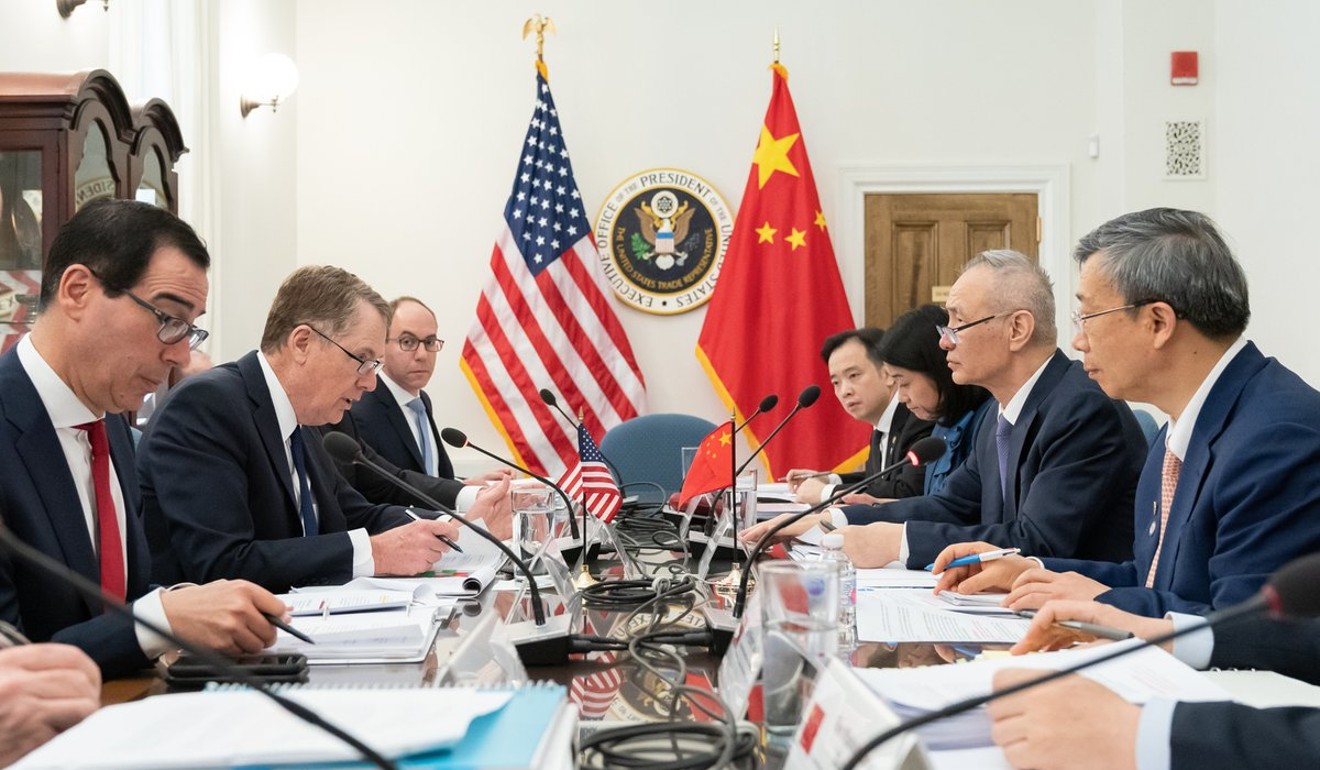
CNBC reported that China acknowledged issues of intellectual property thefts, cyber hacking and forced technology. Photo: White HouseShare:
He also said the case of Huawei, China’s telecoms giant in legal disputes with the US government, had “generally not come up” during the talks. “We looked at it as a legal matter so far.”
The talks are the latest after both sides resumed negotiations four months ago and follow two days of talks last week when Liu hosted Lighthizer and US Treasury Secretary Steven Mnuchin in Beijing.SUBSCRIBE TO US CHINA TRADE WARGet updates direct to your inboxSUBMITBy registering for these newsletters you agree to our T&C and Privacy Policy
Myron Brilliant, executive vice-president for international affairs at the US Chamber of Commerce, said that negotiations had now entered the “endgame stage”. TOP ARTICLES1/5READ MOREA US teenager who ‘escapedkidnappers’ claims he is Timmothy Pitzen, who vanished in 2011 after mother’s death
Break up ‘unnatural’ monopolies, US-China business group head urges Beijing
On Tuesday, Brilliant called the talks this week “a very critical window”.
“Ninety per cent of the deal is done, but the last 10 per cent is the hardest part to get there. It’s the trickiest part and it will require trade-offs on both sides,” he said.
“Both sides have been pretty clear that they would like to wrap things up in April. Whether they can get here is going to be determined on the basis of whether they can handle these outstanding tricky issues.”
He said two “particularly sensitive areas” that had stood in the way were an enforcement mechanism that would hold China responsible for implementation of reforms it agreed to in the deal and the removal of US tariffs.
The US economy is not strong enough to win cold war 2.0
A source said that China had made further concessions during this round of talks, including greater opening of its markets, and that it was pushing for a summit between Chinese President Xi Jinping and US President Donald Trump to sign the deal later this month. Another possible option was for the two leaders to meet in June at the G20 summit in Japan.
Kudlow, director of the White House’s National Economic Council, said on Tuesday that negotiators were making progress, but “we are not there and we hope this week to get closer”.
If Beijing does not live up to the promises it makes in the trade agreement, the US wants a unilateral right to retaliate without China taking corresponding actions. But Beijing has refrained from giving up its sovereignty and insisted that any mechanism should be enforced on both sides.
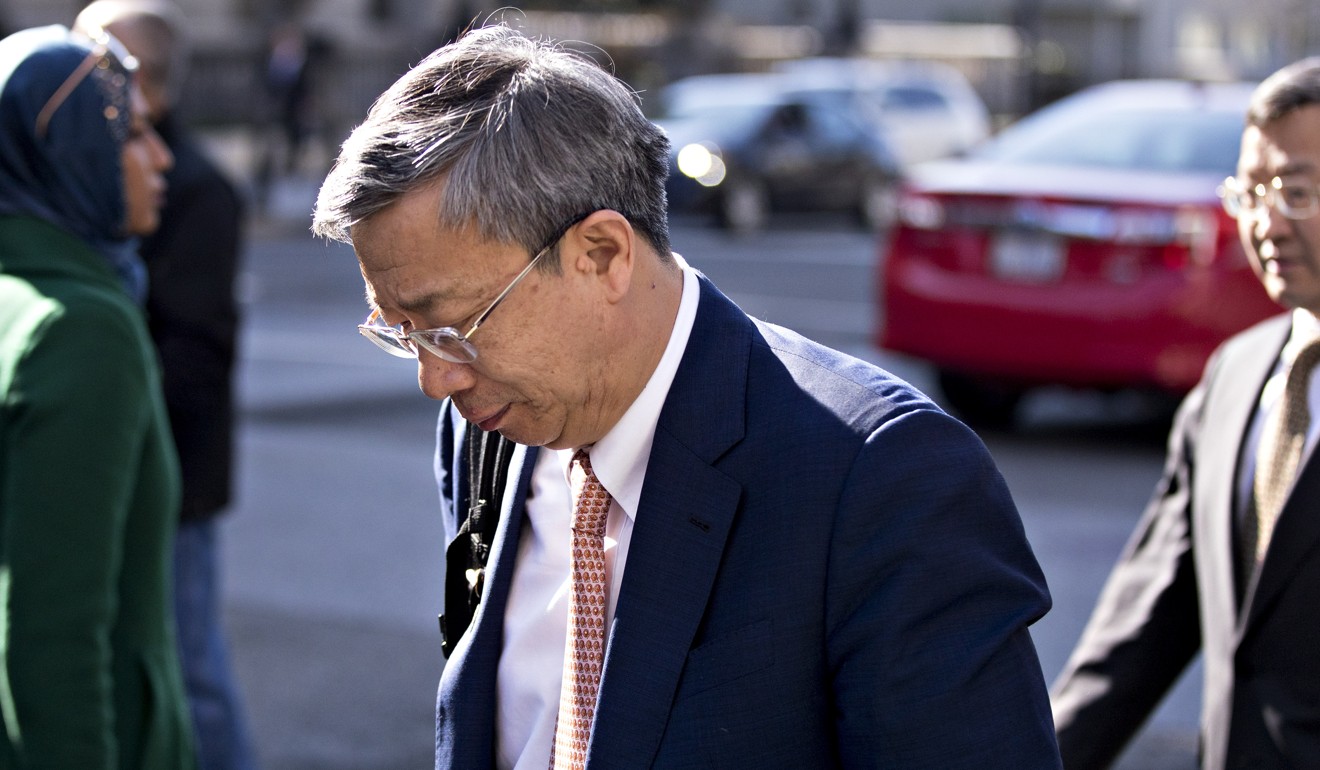
People’s Bank of China governor Yi Gang arrives for the trade talks in Washington. Photo: BloombergShare:
The other issue was how much of the US tariffs – currently imposed on US$250 billion worth of Chinese goods, if any, would be eliminated, Brilliant said.
“China has been very clear, in public and privately, that they would like to see all the tariffs gone,” he said. “The [Trump] administration has been equally clear that they want to keep some of the tariffs in place as a way to have leverage over China to fulfil its obligation under whatever final package is agreed to.”
Trump’s tariffs not the answer to the US trade deficit, says the IMF
In a sign of goodwill, China announced on Sunday it would continue suspending the implementation of new tariffs on US cars.
China also moved on Monday to tighten curbs on the manufacture of the painkiller fentanyl, a response to repeated requests by the US, which has blamed Chinese imports for fuelling the American opioid crisis that has claimed thousands of lives.
A Chinese protester blocked Liu’s car on Wednesday morning as he headed to the USTR, according to video footage taken by a fellow activist Zhao Yan. The protester was restrained by police officers and later released, Zhao said.
When Liu was in Washington for trade talks on January 31, several demonstrators protesting against Beijing’s forced relocation of Chinese citizens rushed at the Chinese delegation as they left their hotel on their way to the talks.