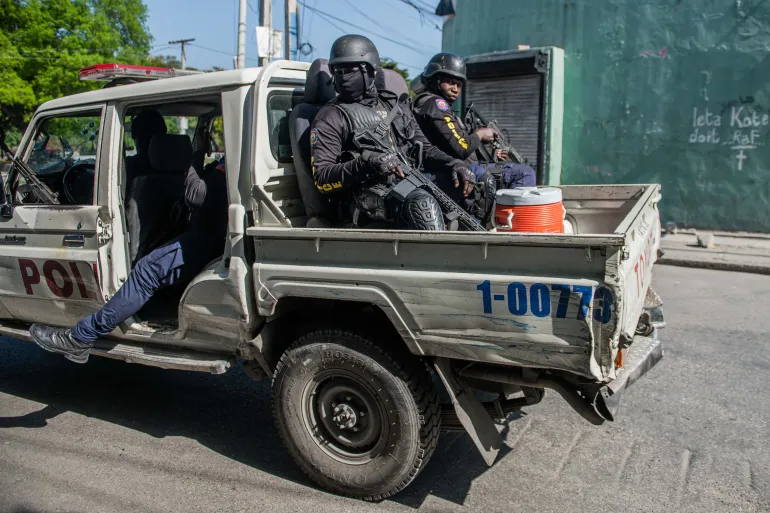
As per the Human Rights Watch, drone strikes have killed more than 1,200 people since 2025, with the majority of strikes originating from Haitian security forces. Aimed at antigang operations, the drone strikes are primarily taking place in Port-au-Prince, the capital and a city with over 3 million inhabitants. The population density of Port-au-Prince is estimated to be around 40-44,000 people per square mile, around double that of Los Angeles and nearly four times as much as Washington D.C., which makes precision strikes increasingly difficult. The security forces enjoy assistance from Vectus Global, a U.S. private military firm which has supplied the drones strapped with explosives. Desperation can be understood, though, given the capital is now almost 90% controlled by gangs, and the government of Haiti has yet to reestablish itself in any meaningful manner. Regardless, as per the Human Rights Watch’s report, strikes from January to March in the West Department have killed 17 children and 43 adults who were believed not to be members of any criminal groups.
Haiti currently has no government. They’ve been collapsing since 2010, but especially since the 2021 assasination of the president and, since then, gangs have taken control of much of the country which has led to decreased living standards and many unnecessary deaths. Who is willing to help Haiti? The small support forces have been able to do very little and gangs are the only support mechanism for much of the populace. Even if Haitian security forces retake the capital, there’s still no elected officials and corruption persists even in the few government offices left. What Haiti needs is either a local revolutionary who can unite the country or an external actor who is willing to demolish the system that exists in order to build a new one.
There are very little stakeholders in Haiti’s future. The Dominican Republic is certainly concerned – they have to worry about refugees spilling across the border as well as gangs and other criminals who may attempt to cross – but apart from the Dominican, there’s not much else. Haiti is, at this point, a failed state and for any company or country to come in, they’d have to invest heavily in infrastructure and likely would need to put boots on the ground to keep an effective change. The United States comes to mind as a country capable of doing so, but when was the last time we had success nation building?
International Law is certainly a funny topic when it comes to Haiti. Private military companies are rarely held to any real standards unless their funding runs dry, and in the case of Haiti there is no government to particularly stop any violence going on. The UN released a statement condemning the attacks as ‘likely illegal’, but what more will they do? When a country is in open free fall, why is it that they cannot expect an ounce of assistance from their brethren?